ART MOVEMENT
Neoclassicism
1760s – 1840s
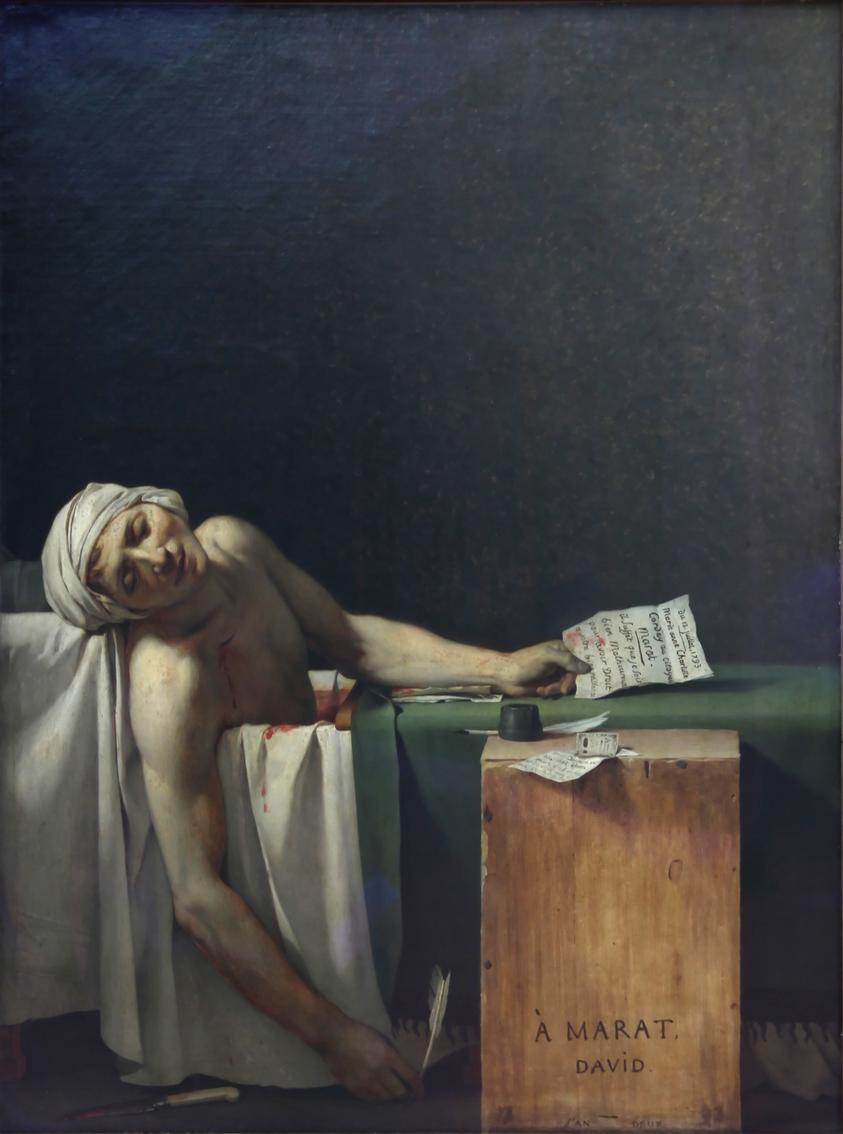
A movement born from the convergence of three events in the mid-18th century: the excavations of Herculaneum (begun 1738) and Pompeii (begun 1748), which brought ancient Roman domestic life into sudden, physical contact with the modern world; the theoretical writings of the German art historian Johann Joachim Winckelmann, who argued in his 1764 History of Ancient Art that Greek sculpture represented an ideal of 'noble simplicity and calm grandeur' that modern art should recover; and a widespread revulsion among educated Europeans against the frivolity, ornament and erotic frivolousness of the Rococo style. Neoclassicism was, above all, a moral argument dressed as an aesthetic one. Neoclassical painters turned to ancient Greece and Rome for subjects, for formal models and for ethical content. The dominant mode was the 'history painting' — large-scale depictions of classical episodes chosen because they illustrated virtues: self-sacrifice, civic duty, stoic endurance in the face of death. Jacques-Louis David was the movement's commanding figure. His Oath of the Horatii (1784) showed three Roman brothers swearing to die for the Republic in a composition of geometrical severity that felt like a rebuke to every curvilinear Rococo surface in the Salon. The clean contour line, restrained palette, frontal composition and stoic subjects became the movement's signature. Jean-Auguste-Dominique Ingres extended Neoclassicism into the 19th century with an increasingly sensuous and psychological refinement, his line becoming something almost musical. The movement was inseparable from the political upheavals of the age. David painted the martyrs of the French Revolution — Marat dead in his bath, the Tennis Court Oath — as Roman republicans, and later put the same compositional authority at Napoleon's service, most famously in Napoleon Crossing the Alps (1801). The equation of classical Rome with revolutionary France, and then with imperial France, was a deliberately constructed political identity. By the 1820s Neoclassicism was fighting a rearguard action against Romanticism, which accused it of cold formalism; the quarrel between Ingres and Delacroix — line versus colour, antiquity versus the modern world — defined the terms of French academic painting for a generation.