ART MOVEMENT
Symbolism
1880s – 1910s
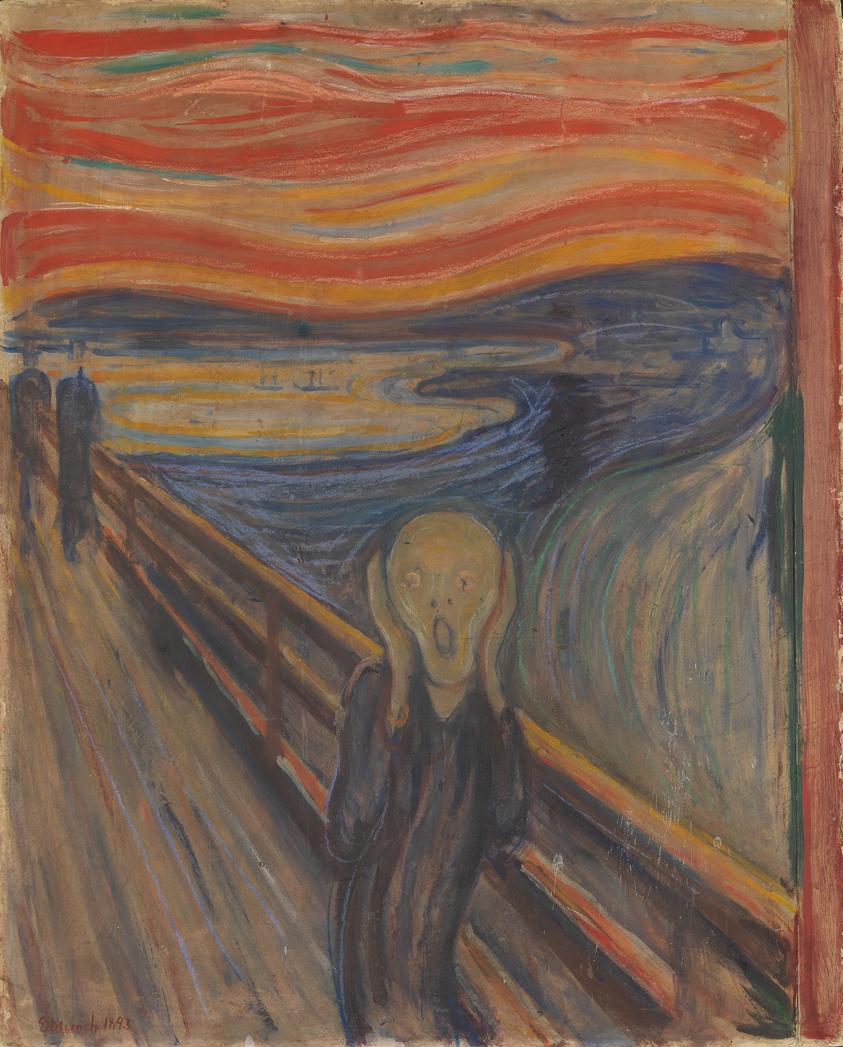
A late-19th-century artistic and literary movement that turned away from the observable world — the domain of Realism and Impressionism — toward dream, myth, decadence and the uncharted territory of the inner life. The Symbolists believed that visible reality was only the surface of a deeper, invisible order, and that art's proper task was to evoke that deeper order through suggestion rather than description. The movement took its name and much of its theoretical language from French poetry — Stéphane Mallarmé, Paul Verlaine, Arthur Rimbaud — who were arguing at the same moment that a poem's task was not to state ideas but to induce states of feeling through sound and image. The 1886 Symbolist Manifesto, written by the poet Jean Moréas, laid out the case for art that used concrete symbols to approach ideas too elusive for direct statement. In painting, this translated into a charged, often unsettling visual language: distorted figures, dreamlike spaces, allegorical subjects drawn from myth and the unconscious, colour used expressively rather than descriptively. Gustave Moreau populated enormous canvases with jewelled, androgynous figures from classical antiquity — Salome, Galatea, Orpheus — treated with an almost pathological sensuous intensity. Odilon Redon worked in a personal, semi-automatic imagery of floating heads, eyes without bodies and hybrid creatures that anticipated Surrealism by forty years. Edvard Munch mapped psychological states — anxiety, desire, isolation, dread — onto the visible landscape with a directness that shaded into Expressionism. In Vienna, Gustav Klimt fused Symbolist imagery with Byzantine gold mosaic and the erotic decorative vocabulary of the Secession. Symbolism was deeply intertwined with the emerging sciences of the unconscious — Charcot's studies of hysteria, Freud's early work on dreams — and with the decadent literary culture of the fin de siècle. It influenced almost every major early-20th-century development: German Expressionism, Surrealism, and the broader Modernist project of making the invisible visible. Its basic conviction — that the inner world is as real and as artistically valid as the outer one — is now so fully absorbed into Western art that it is difficult to remember how radical it once was.